

A Complete Guide to Xingyi Quan
Among the many schools of Chinese internal martial arts, Tai Chi is known for its soft, flowing, and continuous movements, Baguazhang for its evasive footwork, while Xingyi Quan stands out for its solid, integrated power and fierce force. Free from flashy movements, every punch and stance is grounded and practical, seamlessly combining offense and defense. It is a style with deep combat heritage among northern traditional martial arts.
I. Origins: From Xinyi to Xingyi
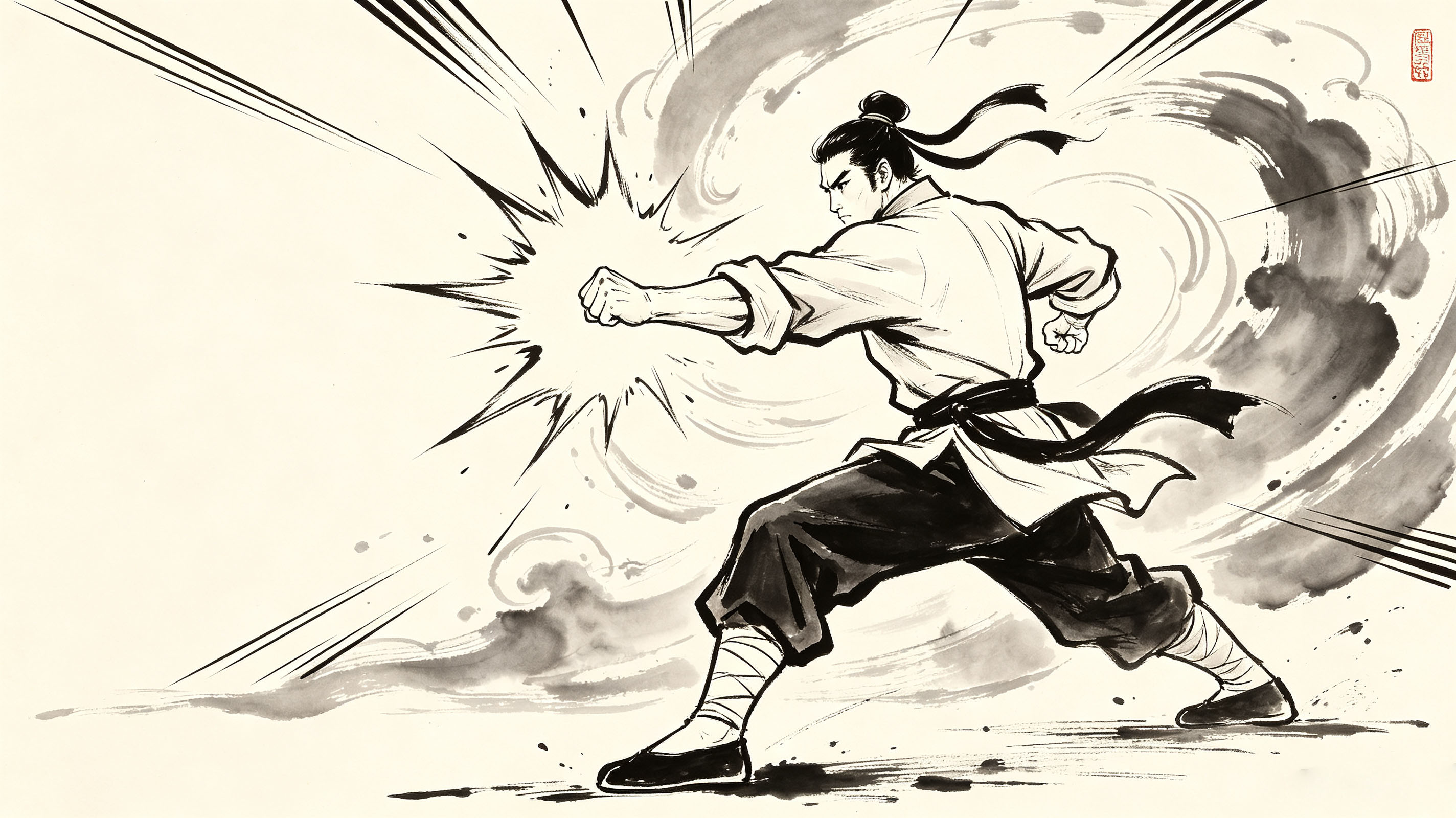
Xingyi Quan originated from Shanxi Xinyi Liuhe Quan. In the late Qing Dynasty, the martial arts master Li Luoneng systematically refined it and officially named it Xingyi Quan. The entire system emphasizes “External Form Matches Internal Intent” — outward movements correspond to internal power, achieving “Intent Leads to Power” and “Unity of Internal and External.” After over a century of transmission, it has developed into two major lineages in Shanxi and Hebei. Its clean and bold stances are widely loved by martial arts enthusiasts.
II. Core Philosophy: Five Elements as Foundation, Twelve Forms as Essence
The entire system of Xingyi Quan is built around two core pillars, with concise techniques and no superfluous movements.
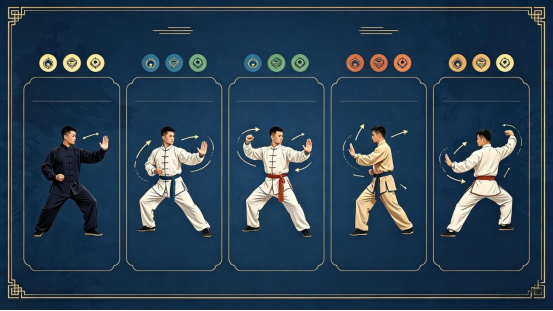
1. Five Elements Fist (Five Fundamental Techniques)
Corresponding to Metal, Wood, Water, Fire, and Earth, these form the foundation of Xingyi Quan. Each of the five techniques serves a distinct purpose, balancing offense and defense:
Splitting Fist (Pi Quan): Associated with Metal; features a downward splitting palm technique with solid, expansive power, primarily targeting the centerline to break through defenses.
Crushing Fist (Beng Quan): Associated with Wood; features a straight punch driving forward with explosive short-range power, advancing one step per punch straight down the center.
Drilling Fist (Zuan Quan): Associated with Water; features an upward drilling and overturning motion, lifting the hands upward, specifically designed to break through low-line defenses.
Cannon Fist (Pao Quan): Associated with Fire; features a horizontal block with fierce outward power, parrying while simultaneously striking the opponent.
Horizontal Fist (Heng Quan): Associated with Earth; features horizontal twisting with body-wrapping and energy-sinking, using the horizontal to defeat the straight, neutralizing linear attacks.
2. Twelve Animal Forms (Biomimetic Boxing Techniques)
Drawing from the combat habits of twelve animals, these are integrated into the boxing techniques, simulating the power generation traits of birds and beasts:
Dragon Form trains evasive shifting, rising and falling movements; Tiger Form trains sinking, powerful force; Monkey Form trains agile dodging and turning; Horse Form trains charging attacks; Rooster Form trains stable rising and landing; Goshawk Form trains compact, drilling, and overturning movements; Snake Form trains soft, smooth, and coiling motions; Swallow Form trains light and nimble weaving; Eagle Form trains gripping and sinking power; Bear Form trains body-wrapping ,butting, and shouldering; Alligator Form trains left-right twisting; and Horse Form (Dai) trains expansive opening and closing.
III. Technical Characteristics: Plain and Unadorned, Striking Within an Inch
1. Stance Training as Foundation, Solid Roots
Xingyi Quan places great emphasis on Three-Body Stance (San Ti Shi) Standing Meditation. By relaxing and sinking the body while standing upright, stabilizing the lower base, and sinking the breath to store power, one builds a solid Horse Stance (Ma Bu) foundation to generate Whole-Body Power.
2. Direct Advance and Strike, Wide Opening and Hard Closing
Techniques move in straight lines without unnecessary arcs. Stepping forward means punching simultaneously — offense and defense are synchronized in close-quarters striking. The principle is “fix the stance when striking, defeat the opponent in half a step.”
3. Unity of Hardness and Softness, Whole-Body Power Flows Through
Xingyi Quan is outwardly fierce and hard, inwardly relaxed, sinking, and storing power. Force is not generated by brute arm strength but driven by the waist and hips mobilizing the Whole-Body Power. When a punch is delivered, the entire body fires in unison, producing tremendous penetrating force.
4. No Flashy Moves, Emphasis on Practical Application
The routines are brief, with no acrobatic leaps or flips for show. Every technique corresponds to a genuine self-defense and combat application.
IV. Beginner’s Daily Training Guide
Step 1: Three-Body Stance (San Ti Shi) Standing Meditation
Practice Standing Meditation daily. Sink the shoulders and drop the elbows, bend the knees and settle the hips, maintain an upright posture, calm the mind and nourish the breath, and build a solid foundation.
Step 2: Solo Practice of the Five Elements Fist
Repeatedly practice the five techniques — Splitting (Pi), Crushing (Beng), Drilling (Zuan), Cannon (Pao), and Horizontal (Heng). Train one movement at a time, refining the power generation habits. First master each individual fist technique before attempting combinations.
Step 3: Practice the Twelve Animal Forms
Building upon the Five Elements Fist, practice each of the Twelve Animal Forms in sequence, imitating the animals’ body movements to enrich offensive and defensive variations.
Step 4: Technique Application Breakdown and Live Sparring
Break down the offensive and defensive applications of each technique, practice Pushing Hands and Free Sparring, so that the fists follow the intent and can be unleashed when facing an opponent.
V. Training Tips
Xingyi Quan generates heavy and fierce power. Before practice, thoroughly warm up the waist, hips, and knee joints to prevent injuries. During practice, keep the whole body relaxed, exploding with power only at the moment of striking — avoid tensing the entire body and striking rigidly. Xingyi Quan emphasizes nourishing the breath and cultivating skill; avoid reckless aggression, and keep the original aspiration of strengthening the body and preserving this national intangible cultural heritage martial art.
Xingyi Quan, with one stance and one punch, is plain and understated, embodying the vigorous and grand ethos of northern martial arts. It does not pursue flashy techniques but focuses on the practical core of defeating an opponent with a single strike. It is both a traditional combat art for self-defense and a health-preservation practice for nurturing body and mind.
Every movement is measured in its sinking and rising; hardness and softness give birth to each other — this is the unique Eastern martial ethos of Chinese martial arts.